
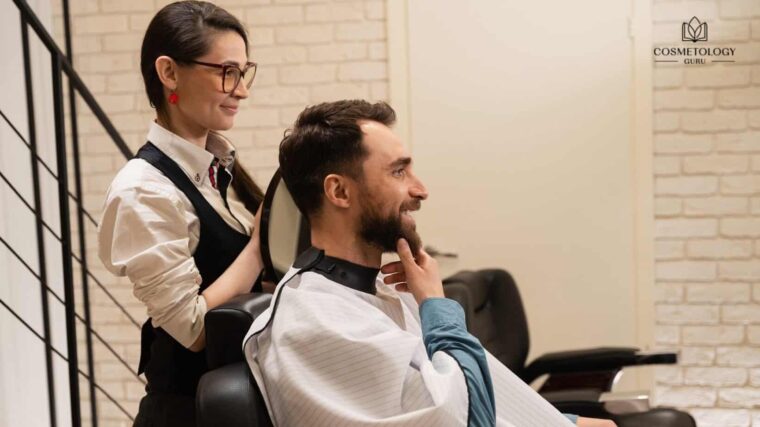
Have you ever thought about what a day in the life of a barber looks like? It’s easy to picture clippers buzzing and hair falling to the floor, but there’s a lot more going on behind that barber chair.
From precision fades to client conversations, barbers blend technical skill, artistry, and hustle into every workday. Whether you’re considering barbering as a career or you’re just curious about what a barber does on a daily basis, understanding the barber duties and daily routine is a great place to start.
In this guide, we’ll walk you through a full barber job description, from morning setup to client consultations and styling. If you’ve ever searched for barber responsibilities or wanted a real look into what a barber does all day, this guide will give you the insights you need to understand the rhythm and reality of the job.
What Is the Role of a Barber?
We all think that the role of a barber is to just trim and cut a client’s hair. But, there are several other tasks a barber does on a daily basis apart from just trimming and cutting hair.
A barber is professionally trained to offer services such as:

Haircut & Styling Services
- Classic haircut
- Taper fades / skin fades
- Scissor cuts
- Buzz cuts
- Crew cuts
- Razor cuts
- Long hair trims and layering
- Hair styling with pomade, wax, or gel
- Blow-dry and finish
Shaving & Razor Services
- Traditional straight razor shave
- Head shave (razor or clipper)
- Hot towel shave
- Beard line-up with razor finish
- Neck shave and razor detailing
- Razor fade touch-ups
Beard & Mustache Grooming
- Beard trimming and shaping
- Full beard sculpting
- Mustache grooming
- Beard line-up (cheek & neckline)
- Beard oil or balm application
- Beard straightening or blowout
Hair Color & Treatment Services
- Hair coloring (permanent/semi-permanent)
- Hair dyeing (grey coverage, bold colors)
- Bleaching/lightening
- Toning
- Scalp treatments (dry scalp, dandruff control)
- Deep conditioning/protein treatment
- Clarifying treatments
- Keratin smoothing treatment
Scalp & Skin Services
- Scalp massage
- Scalp exfoliation
- Express facials (steam, cleanse, massage)
- Cooling post-shave facial
- Hot towel compress
- Facial hair detox treatment
Grooming Add-Ons
- Eyebrow trimming and shaping
- Ear and nose hair removal
- Hairline clean-up (forehead and neck)
- Sideburn trimming
- Neck and back hair cleanup
- Facial waxing (brows, nose, ears)
Specialty & Premium Services
- Wedding party grooming packages
- VIP / deluxe grooming experiences
- Children’s haircuts
- Senior citizen grooming
- Mobile barbering (on-location)
- Consultation for hair or beard goals
Performing these services, barbers must also master the tools and products required to deliver high-quality results. Understanding how and when to use these tools is essential for both safety and achieving the desired look for each client.
The Barber’s Kit: Tools That Shape Every Style
To bring each cut to life, barbers rely on a carefully curated kit. The most commonly used tools by a barber include scissors, straight razors, clippers, and combs. Barbers are creative and often try new styles for their clients. With the right tool and vision, a simple cut transforms into a statement of style.
Barbers don’t just cut, they create. The right tool, combined with experience and vision, allows them to shape every style with precision. Every item in the kit plays a specific role, whether it’s detailing a fade or sculpting a beard. This balance of creativity and technique is what sets great barbers apart.
But mastering the craft isn’t only about knowing your tools; it’s also about mastering the business behind the chair. While tools help deliver great results, it’s the daily routine that keeps the business running and clients coming back.
Daily Life of a Barber
Working in a barbershop isn’t just about cutting hair; it’s a full-day commitment to grooming, creativity, and personalized service. From maintaining hygiene standards to creating stylish looks, each task plays a role in shaping a barber’s routine. If you’ve ever asked, “What does a barber do on a daily basis?”, this section will walk you through a realistic look at a day in the life of a barber.
Starting the Day: Clean Tools, Clear Mind
A barber’s day starts with preparation. Before a single client walks in, the barber thoroughly cleans and disinfects their workstation tools, such as clippers, razors, brushes, and more.
Maintaining a sanitary environment isn’t just part of the barber’s job description; it’s essential for safety. Once everything is in place, they review the appointment schedule and prepare for the first session.
Client Appointments and Daily Planning
Throughout the day, barbers interact with a diverse range of clients, tailoring each service to individual needs. They listen carefully, offer expert suggestions, and adjust styles to suit hair types, face shapes, and personal preferences.
On a typical day in the life of a barber, they get the opportunity to work mostly with male clients. Most of the time, barbers work on an appointment basis and are aware of their tasks for the day. Working on an appointment basis helps plan the day in a much better way.
A well-planned schedule is key to managing the day effectively. Barbers typically work between 6 to 10 hours, with peak hours often falling on weekends and evenings. Once appointments begin, barbers shift into service mode, where every session requires a combination of technique, communication, and precision.
Delivering Core Services: Cuts, Shaves & More
Their daily routine might include a simple hair trim or a haircut as per the client’s requirement. They might start the procedure by shampooing the client’s hair. Throughout the day, barbers provide a wide range of services tailored to each client’s unique preferences.
They may perform facials, offer facial shavings, trim the client’s beard, or may also fit hairpieces. Based on the state the barber works in, they might have the license to offer services such as highlighting hair, bleaching, and coloring clients’ hair. Few barbers provide services to style the client’s hair, such as permanent waving services.
These services go far beyond what most people assume when thinking of barber duties. Modern barbers offer everything from detailed fades to express facials, enhancing the overall experience. It’s not uncommon for clients to book specialty grooming sessions in advance, especially for events or seasonal trends.
Personalized Consultations: Understanding Client Needs
Before picking up their tools, barbers also offer consultation services. They discuss the client’s requirements, recent trends, services that suit the client’s requirements, and offers/discounts that are available for the services they offer. They also suggest hair products that might work best for the client and address their concerns.
These discussions help build client trust and satisfaction. By recommending the right products or styles, barbers play the role of both stylist and consultant. This is a key part of the barber’s information that clients rely on.
Business Tasks and Client Engagement
Beyond the chair, barbers often step into the role of entrepreneur. From processing payments to upselling products, they manage the business side of operations. Strong client relationships, a welcoming environment, and personalized recommendations all help build loyalty and drive referrals.
Effective client engagement goes beyond the haircut, as it involves building relationships, creating a welcoming environment, and offering personalized recommendations. This not only enhances the client experience but also fosters loyalty and drives word-of-mouth referrals.
By combining quality service with smart business practices, barbers can steadily grow their clientele and reputation, ultimately contributing to long-term career success.
Running the Shop: Leadership Behind the Chair
Last but not least, barbers who own their salons also have managerial duties to take care of. Managerial duties may include supervising the team, hiring new barbers, and firing workers. They also keep track of business dealings and inventory records, arrange for advertising, and order supplies. This adds another layer to the responsibilities of a barber that many people overlook.
Wrapping Up the Day: Clean Down and Reflect
As the day winds down, barbers clean their stations, sanitize tools, and reset for tomorrow. Shop owners may also check inventory, review bookings, and process final transactions. Even after the scissors are set down, a barber’s attention to detail continues, ensuring everything is prepped for a fresh start the next day.
It’s this consistency and pride in their workspace that defines the barber’s daily routine. A barber’s day ends much like it began, with attention to detail, pride in their workspace, and a readiness to serve clients with excellence the next day
7 Reasons to Choose ‘Barbering’ as Your Career
Generally, a lot of thought goes into choosing a career. It takes time to figure out what you are passionate about and good at. If you love working with people and offering services to address their concerns, then barbering is a good career choice for you. Here are a few reasons to choose ‘barbering’ as your career.
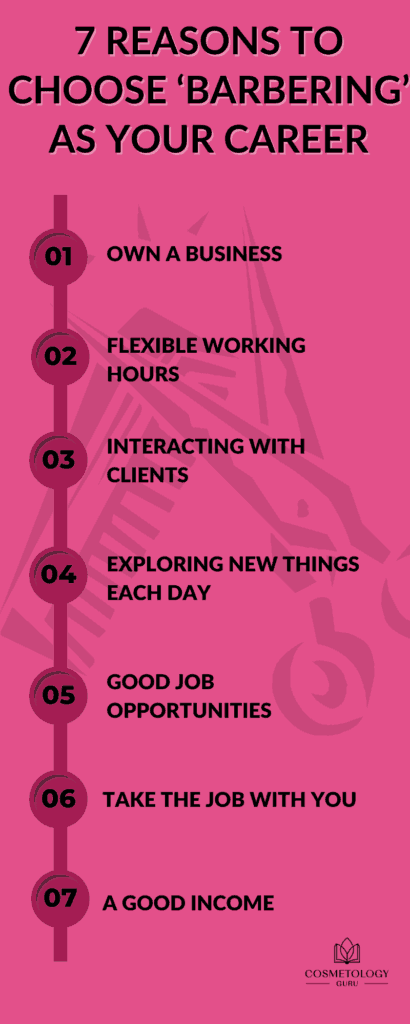
Own A Business
As a barbering professional, you get to work in an industry where you can be creative with your work. You get the opportunity to own a business for yourself after gaining experience in the industry. Owning a business and being your own boss in the field of barbering is a great goal to work towards. You can start your business small as a barber and grow as you build a good clientele in your surrounding area.
Flexible Working Hours
Barbering provides you with the opportunity to have flexible working hours. Most barbers work based on appointments. Working on an appointment basis also helps you prepare for the day in a much better way.
Interacting With Clients
Barbering offers you the opportunity to meet and interact with many people. Generally, barbers get the chance to interact with clients as they work because the service takes time to complete. Barbering is a good career choice if you love to interact with people on a daily basis.
Exploring New Things Each Day
Barbering is a profession where you get the opportunity to explore a lot of new things each day. You meet new clients with different preferences, and different types of services needed. Most of the time, you will meet clients with unique preferences that make the job less repetitive and more enjoyable. You also get to be creative and try out new things with your clients.
Good Job Opportunities
When we consider a career, we always tend to think about the scope that profession has in the future. As a barber, you will have ample job opportunities. Barbering is an industry that will keep growing even in the future as long as the human race exists.
Take The Job With You
As the industry keeps growing, the demand for barbers automatically grows with it. Mastering the skills and gaining all the required knowledge adds more opportunities to your career.
A Good Income
You get to make a good level of income. The potential of making a good income as a barber is high. You can also work as a freelance barber apart from your actual work to stabilize yourself financially. Having the right knowledge and skills can help add more value to your career as a barber.
As you can see, the path of barbering offers far more than just a chair and a pair of clippers; it’s a lifestyle rooted in skill, independence, and creativity.
Launching Your Career as a Barber
The life of a barber is both hands-on and heart-driven path. If you’re someone who values connection, craftsmanship, and creative freedom, this career can be your perfect match. From the buzz of clippers to the satisfaction of seeing a happy client leave your chair, each day brings new opportunities to grow both personally and professionally.
So, are you ready to start shaping your future in barbering? Begin by building your skills and confidence with our free barber practice test. With focus and passion, your next chapter could begin right where the mirror meets the chair.
Frequently Asked Questions about Barbering
1. Do barbers make a good living?
Yes, barbers can make a good living, especially with a strong client base and additional services like grooming packages or product sales. Income also increases with experience, location, and owning a barbershop.
2. What age do barbers retire?
Barbers typically retire between the ages of 60 and 70, but there’s no fixed retirement age. Many continue working part-time or independently as long as they’re healthy and enjoy the job.
3. Is barber school worth it?
Yes, barber school is worth it if you’re serious about pursuing a career in barbering. It provides essential training, licensing preparation, and hands-on experience needed to build a successful and long-term career in the field.
4. Why did barbers pull teeth in early ages?
In early times, barbers pulled teeth because they also served as informal medical practitioners known as “barber-surgeons.” Due to limited access to doctors, especially in rural areas, barbers performed minor surgeries, including tooth extractions, bloodletting, and wound care.
5. What’s the hardest part of being a barber?
One of the hardest parts of being a barber is standing for long hours while maintaining precision and focus throughout the day. Additionally, building a loyal clientele and managing inconsistent income during slow periods can be challenging, especially early in the career.
